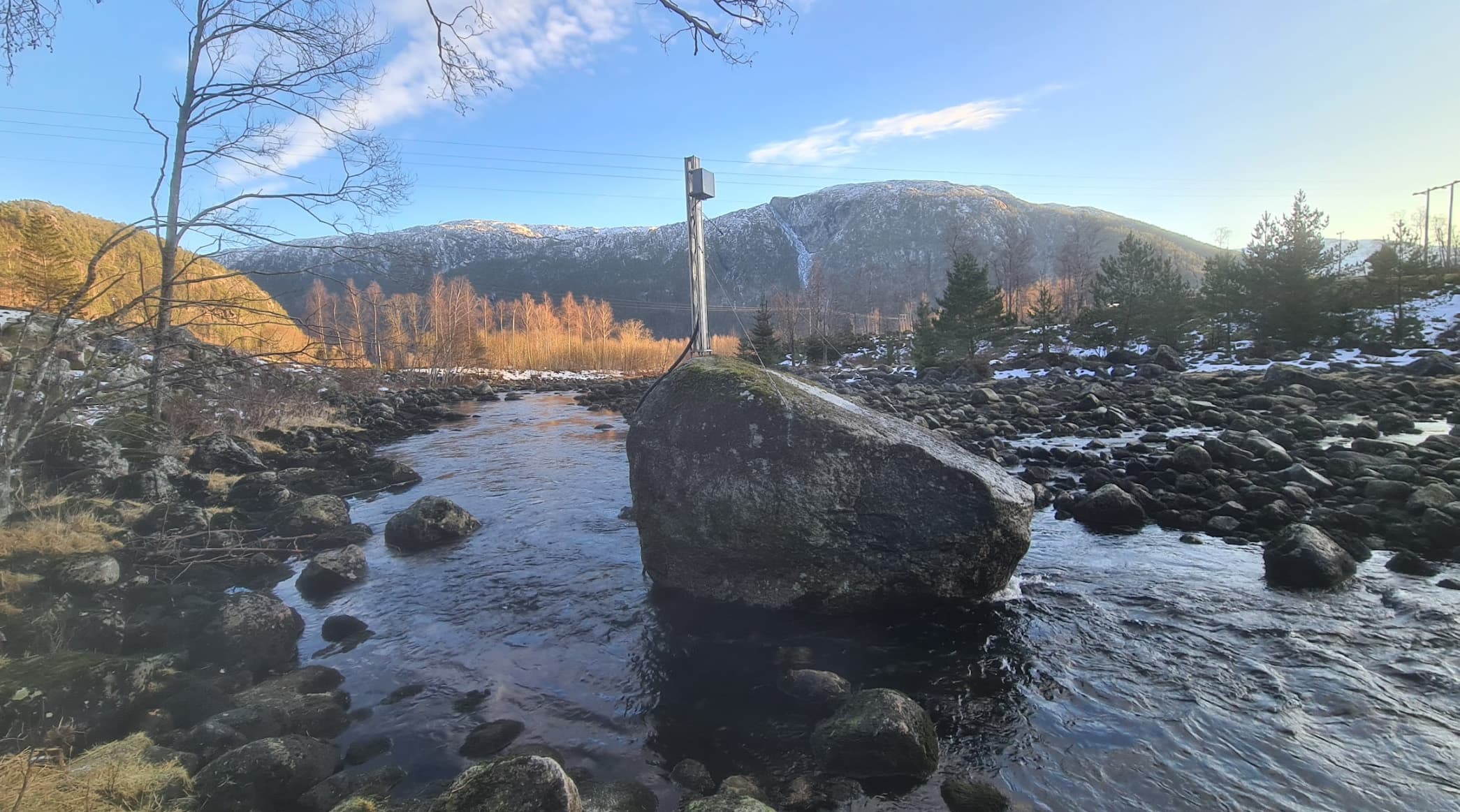
Knowing how much water you can actually use, every single day.
Running a small hydropower plant is simple in principle. Water flows in. Required environmental flow must pass downstream. The rest can generate electricity. The challenge is knowing exactly how much that “rest” is at any given moment.
Get in touch
We’d be happy to hear how you monitor available water today, and how this affects production, compliance, and daily operations.
What is expected
Small hydropower operators are expected to manage water responsibly while maintaining stable production and sound financial performance.
Environmental flow must always be respected
Required downstream discharge must be maintained at all times.
Operation must be traceable
Water use and discharge decisions must be documented and defensible.
Production must follow real inflow
The plant should operate according to actual available water without creating risk.
The river must be protected
Operation must consider downstream conditions and environmental impact.
Variability must be handled calmly
Rapid inflow changes or upstream releases must be managed in a controlled way.
When expectations meet daily reality
In daily operation, the picture is not always clear.
Inflow changes quickly
Rain, snowmelt or upstream releases can alter conditions within hours.
Available production water is not always obvious
After environmental flow is met, it is not always clear how much water remains for generation.
Conservative operation feels safer
When uncertain, operators often add extra margin to avoid breaching requirements.
Information is fragmented
Flow data, intake levels and production figures are not always viewed together.
Lost water cannot be recovered
Water that passes unused represents revenue that cannot be regained.
What flow management is really about
Daily operation of small hydropower plants means balancing three things at the same time: inflow, required environmental flow, and generation. The water that arrives is limited. Some must always pass downstream. The rest can generate revenue. The challenge is knowing where that boundary sits, right now.
This is not about pushing production as high as possible. It is about having a precise understanding of what can be used and what must pass.
Do you have questions?
Get in touchHow we contribute
We support operators in gaining clearer control over daily water use.
Clarifying available inflow
Making it easier to understand how much water remains after required discharge.
Reducing unnecessary spill
Helping avoid situations where usable water passes unused.
Supporting steady operational decisions
Providing a clearer basis for when to run and when to hold back.
Simplifying documentation
Making it easier to demonstrate responsible operation over time.
Improving day to day predictability
Strengthening visibility across both natural and regulated river systems.
What this provides
Better utilisation of available water
More inflow converted into production within required limits.
Reduced revenue loss due to uncertainty
Less need for conservative margins that lead to unnecessary spill.
Greater confidence in daily decisions
Operators know what is available and what must pass downstream.
Clearer documentation
It becomes easier to demonstrate that environmental flow requirements are met.
More stable operation
Improved visibility reduces surprises during rapid inflow changes.
This solution is designed for organisations responsible for the daily operation of small hydropower plants and for balancing production within fixed flow requirements.
- Owners of small run of river plants
- Operators with limited storage
- Companies managing smaller hydro portfolios
- Water rights holders responsible for discharge
- Operators affected by upstream regulation

We'd love to hear from you
If you operate small hydropower and want stronger day to day control over how much water can be converted into revenue, we welcome a conversation. The goal is to understand how you work today and explore whether greater clarity can improve both financial performance and responsible operation.
Scott Basgaard
Customer Relations
Prefer a form?